Join the online modules on urban health capacities!
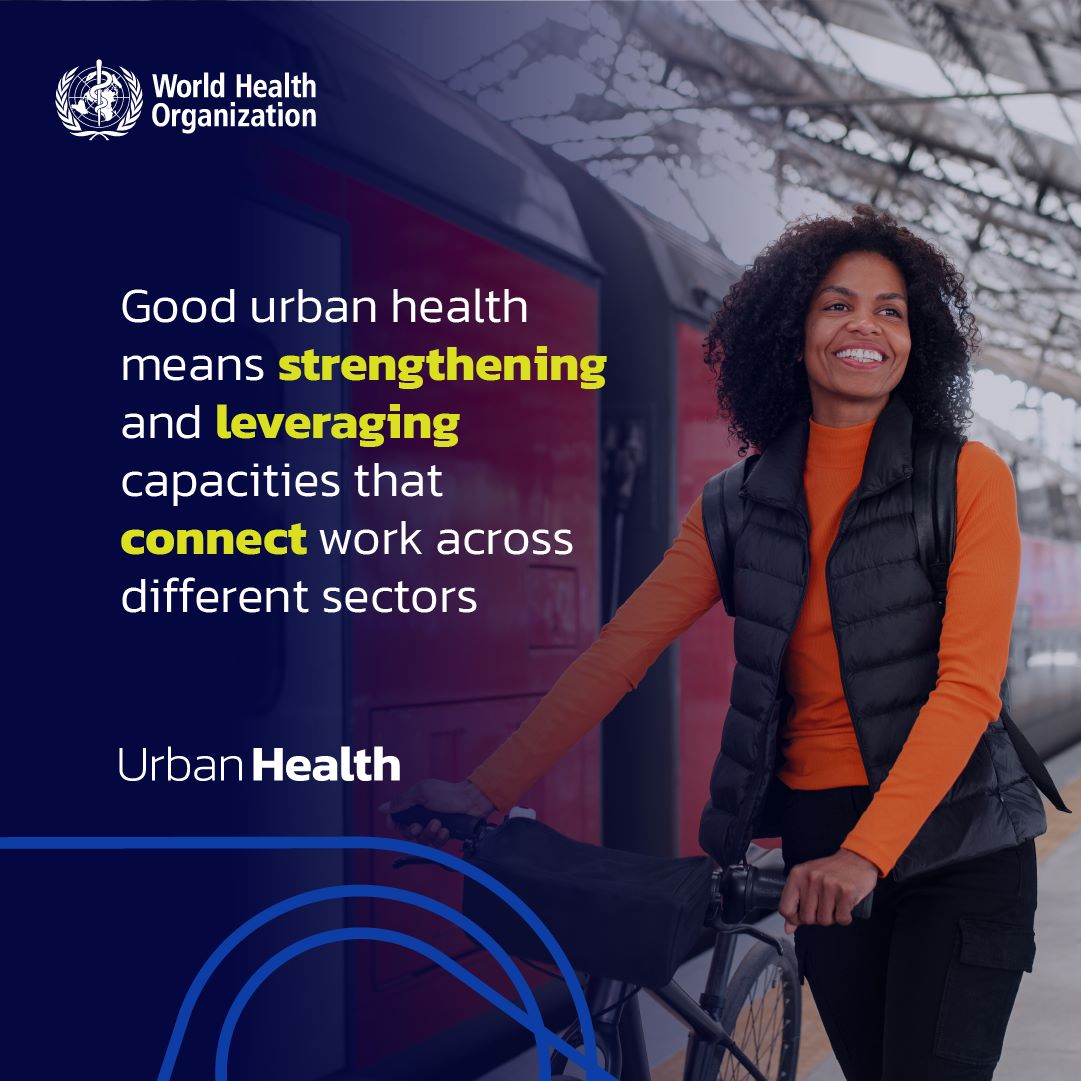
The Urban Health Training Course equips practitioners and policymakers with the knowledge, skills, and networks to improve urban health and well-being through a holistic, integrated approach. It focuses on foundational knowledge, collaborative practice, effective engagement, and diagnostic and problem-solving competencies. The course targets those influencing health determinants within and beyond the health sector, including actors shaping physical and social environments.
On World Cities Day 2025, the WHO launches the first two of nine modules as a preview of what learners can expect. These modules can be taken individually or discussed in local cross-sector teams, offering a shared opportunity to explore how health can be improved through coordinated action. Module 1 – Introduction to urban health: Introduces key concepts defining the urban environment — such as neighbourhoods, density, and land use —and how they shape health. It explores urban health inequities and the structural factors behind them, while examining opportunities and risks cities present, including those related to mental health, chronic and infectious diseases, injuries, violence, and climate change. Module 2 – Conceptual models and frameworks for urban health and equity: Explains how conceptual frameworks and models can help make sense of the complex links between urban environments and health. Participants learn how socioeconomic and environmental factors interact through structural and intermediary determinants and examine features of effective interventions that promote health equity in urban settings.


Comments
Post a Comment